
The Interior Design Process: From First Conversation to Clear Decisions
A good renovation depends on a clear workflow
A successful interior design project is not created in one dramatic moment.
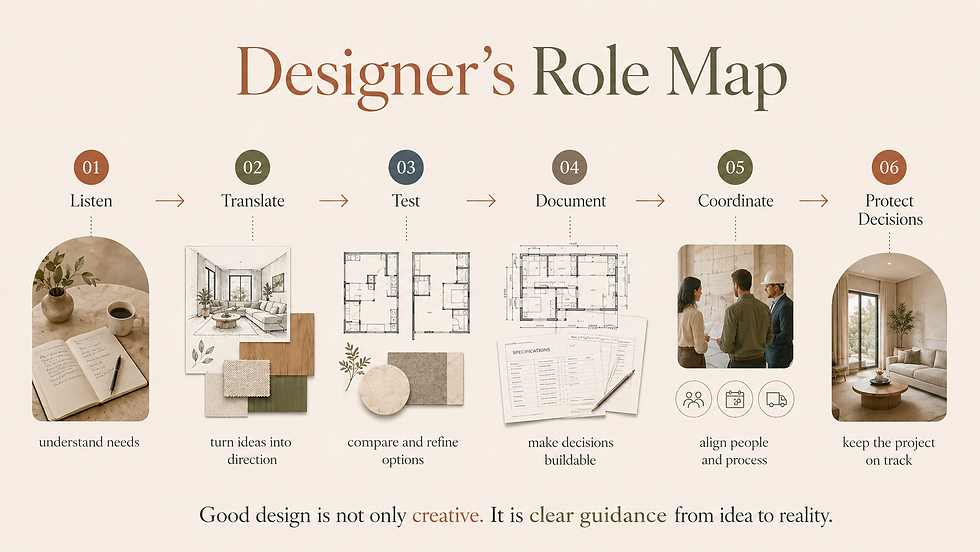
It is built through a clear sequence of decisions: understanding the client, studying the existing home, defining the concept, planning the layout, choosing materials, preparing technical documents, and supporting execution.
Most people begin a renovation by thinking about the visible result: the kitchen, the flooring, the sofa, the bathroom, the lighting, the colors.
But the quality of the final result depends heavily on the quality of the process behind it.
Good design is not only about taste. It is about structure, timing, communication, and decisions made in the right order.
1. The First Conversation: Understanding the Real Brief
Every project begins with a conversation.
A client may say:
“I want a modern kitchen.”“We need more storage.”“The house feels outdated.”“We want something warmer.”“We are moving to a smaller apartment.”“We want to renovate before retirement.”
These are important starting points, but they are not yet the full brief.
The real brief usually sits underneath the first request.
A designer needs to understand:
what is not working today
what changed in the client’s life
who uses the home daily
who visits often
what needs to become easier
what needs to become safer
what objects or habits need to remain
what decisions feel unclear or stressful
A strong design process begins by uncovering the needs behind the words.
Sometimes “I need more storage” means the home lacks proper planning. Sometimes it means the client is overwhelmed by years of accumulated belongings. Sometimes it means the layout no longer supports daily life.
The first stage is not about rushing to solutions. It is about asking better questions.
2. Studying the Existing Home
Before designing what the home could become, it is important to understand what already exists.
This includes:
measurements
existing plans
structural limitations
plumbing locations
electrical constraints
natural light
circulation
storage problems
furniture worth keeping
technical systems
budget realities
building regulations
This stage is not glamorous, but it is essential.
A beautiful idea that ignores the existing conditions will eventually become a problem on site.
Professional design requires a realistic look at the gap between the client’s dream and the building’s actual conditions.
The designer’s role is not to cancel the dream. It is to translate it into something that can be planned, priced, approved, and built.
3. Defining the Concept
The concept is not just a mood board.
A real design concept gives direction to the entire project.
It defines:
the atmosphere of the home
the material language
the emotional tone
the level of formality
the relationship between old and new
the balance between openness and intimacy
the way the home should support daily life
For a young family, the concept may focus on flexibility, durability, and energy.
For empty nesters, it may focus on calm, hosting, comfort, refinement, and easier maintenance.
For retirees, it may include future-ready planning, hidden accessibility, better lighting, safer bathrooms, and softer transitions between private and public spaces.
The concept should become a filter for decisions.
When the project becomes complex, the concept helps answer:
Does this material belong? Does this layout support the lifestyle? Does this object add meaning or clutter? Does this choice serve the atmosphere we are trying to create?
Without a clear concept, clients often get lost in options.
4. Layout and Planning
Layout is where the project becomes serious.
This is the stage where the home’s logic is rebuilt.
It may include decisions about:
kitchen position
bathroom layout
room functions
storage locations
entrance experience
circulation
furniture scale
lighting zones
work-from-home areas
guest accommodation
laundry
accessibility
safe room use
hosting flow
This is often the most important phase of the project because it affects everything that comes after.
A beautiful material cannot fix a badly planned layout.
For mature homeowners or people entering a new stage of life, planning should also look beyond the immediate present.
The home should support current routines, but it should also remain comfortable in the coming years.
This does not mean designing out of fear.
It means designing intelligently.
A wider passage, a safer shower, better lighting, accessible storage, and fewer unnecessary obstacles can improve daily life without making the home feel clinical.
5. Visualization and Client Understanding
Many renovation mistakes happen because clients approve things they cannot truly imagine.
Plans and elevations are necessary, but they are not always enough.
proportions
material combinations
lighting mood
furniture scale
storage volume
wall compositions
relationship between rooms
how the final space may feel
This is where sketches, mood boards, 3D views, renderings, material boards, and layout comparisons become powerful.
The goal is not to create fantasy images.
The goal is to support better decisions.
A good presentation should reduce confusion. It should help the client see the logic of the design, understand the trade-offs, and feel more secure before moving forward.

6. Materials, Finishes, and Details
Materials are where the home becomes tactile.
This stage includes:
flooring
wall finishes
bathroom tiles
kitchen materials
carpentry finishes
countertops
fabrics
metals
lighting fixtures
handles
glass
paint colors
sanitary fixtures
Material selection should never be based on appearance alone.
durability
maintenance
slip resistance
cleaning
aging over time
budget
availability
compatibility with other materials
lifestyle
pets, children, or grandchildren
sunlight exposure
acoustic comfort
emotional atmosphere
The best materials are not always the most expensive.
They are the materials that serve the project with the right balance of beauty, function, and longevity.
A refined home is built from decisions that hold up in real life.
7. Technical Documentation
After the creative decisions come the technical documents.
This may include:
demolition plans
construction plans
electrical plans
lighting plans
plumbing plans
ceiling plans
flooring layouts
bathroom elevations
kitchen plans
carpentry drawings
material specifications
fixture lists
furniture plans
detail drawings
This stage is crucial because it translates the design into instructions.
A project cannot rely on memory, verbal explanations, or inspiration images.
The clearer the documentation, the lower the risk of misunderstandings, delays, and costly mistakes.
Good technical planning protects the design .It also protects the client.
8. Execution and Site Reality
Execution is where the project meets reality.
Even with good planning, renovation sites involve surprises:
hidden plumbing
uneven walls
supplier delays
budget adjustments
contractor questions
structural limitations
discontinued materials
unexpected site conditions
decisions that must be made quickly
This is where the designer’s role becomes practical and strategic.
The process requires communication, prioritization, and the ability to distinguish between a real problem and normal site noise.
Not every change is a crisis. Not every compromise damages the design.
But some decisions must be protected carefully.
The designer helps the client understand where flexibility is possible and where it would harm the final result.
A good interior design process is not about making the project complicated.
It is about making the project clearer.
Each stage has a purpose:
the brief defines the problem
the measurements define the reality
the concept defines the direction
the layout defines the logic
the visualization defines understanding
the materials define atmosphere and use
the technical plans define execution
the site support protects the result
Good design is not only the final image.
It is the process that allows the right home to emerge.
Planning a renovation and not sure where to begin? Start with the process, not the materials. A clear workflow helps prevent confusion, rushed decisions, and expensive mistakes.
Additional relevant reading before renovation:


Comments